THCa Benefits: What It's Good For + Common Uses
THCa is the chameleon of the cannabis plant. For decades, it was merely a scientific footnote. It was viewed as the quiet precursor to the main event. We knew that the plant did not actually grow Delta 9 THC. We knew it grew THCa, or tetrahydrocannabinolic acid, which sat dormant in the raw flower until heat transformed it.
Recently, however, THCa has exploded into the spotlight for two very different reasons. For the wellness community, it represents a potent, non-intoxicating superfood capable of reducing inflammation without the "high." For the recreational market, it represents a legal loophole that allows for a potent, traditional cannabis experience under the guise of hemp.
Understanding the benefits of THCa requires you to understand this duality. You are essentially looking at two different compounds in one package. If you keep it cool and raw, it behaves much like a turbo-charged version of CBD. If you apply heat, it instantly converts into Delta 9 THC, delivering the classic psychoactive effects.
This article focuses on the benefits of the molecule itself, but we cannot ignore the reality of how most people use it.
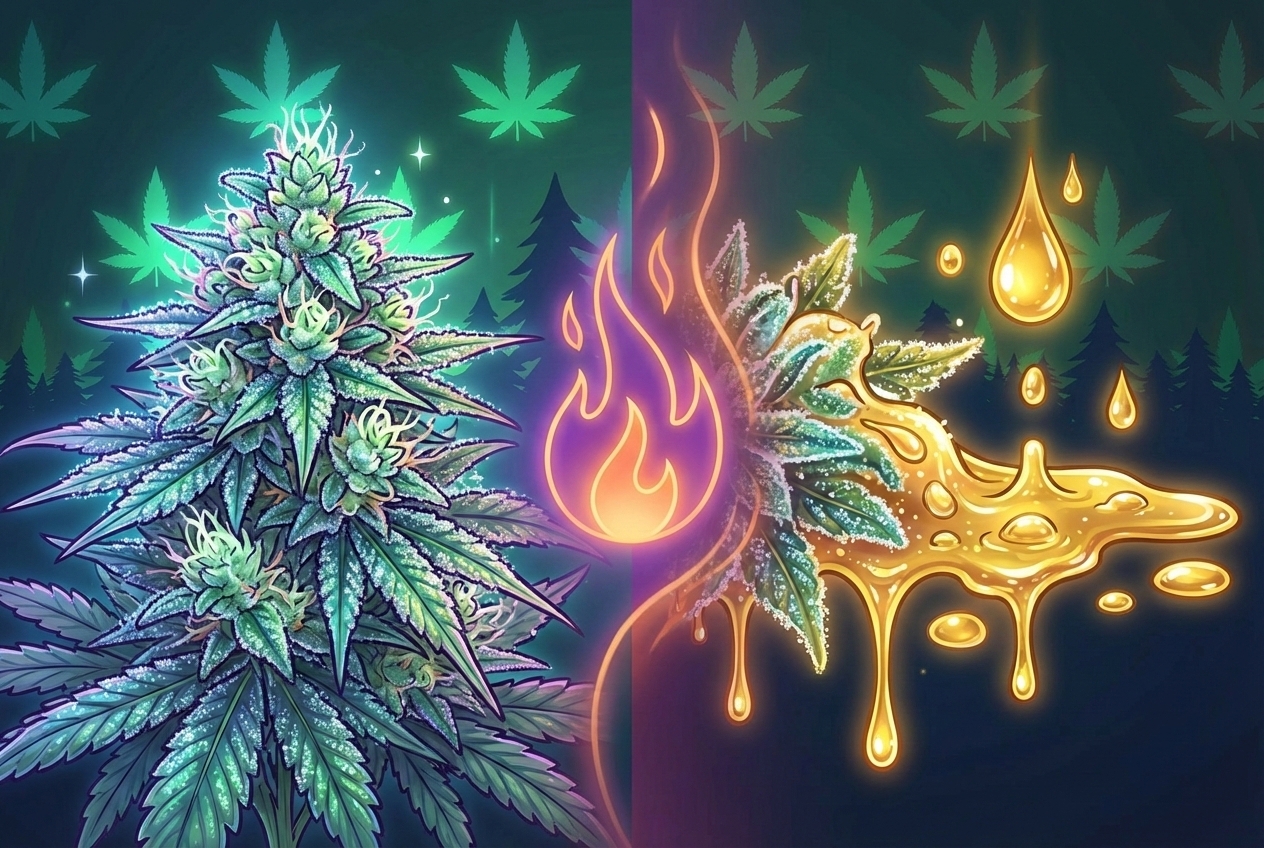
Visualizing the concept of "Decarboxylation" or transformation.
What Is THCa Good For?
The primary utility of THCa depends entirely on whether you light it on fire. In its raw, unheated state, THCa is widely used for its anti-inflammatory properties. It is often consumed by juicing raw cannabis leaves or taking cold-pressed tinctures.
Users in this camp are looking for relief from arthritis, lupus, or neurodegenerative conditions without the cognitive impairment associated with smoking. They treat it almost like a daily vitamin or dietary supplement.
On the other hand, the vast majority of modern consumers buy high-THCa hemp flower to smoke it. In this context, THCa is good for providing a legal, potent, and authentic cannabis experience. Since federal law measures Delta 9 levels, not THCa levels, this flower sits on store shelves legally while offering the exact same benefits as traditional marijuana once combusted.
Therefore, THCa is the most versatile tool in the cannabis toolkit. It is good for people who want the medical benefits of cannabinoids without the buzz, and it is equally good for those who want the full buzz but lack access to a legal recreational dispensary.
Benefits of THCa (Raw vs. Heated)
When we break down the benefits, we must distinguish between the "Raw Benefit" (what the acid does) and the "Converted Benefit" (what happens when you heat it).
Potent Anti-Inflammatory Support (Raw)
Research suggests that THCa may be a more potent anti-inflammatory agent than CBD. It interacts with the body differently. While CBD modulates receptors indirectly, THCa seems to inhibit specific enzymes (COX-1 and COX-2) that drive inflammation. This is the same mechanism used by common NSAIDs like ibuprofen, but THCa does it naturally.
This makes raw THCa a compelling option for people dealing with joint pain, stiffness, or autoimmune flare-ups who cannot afford to be intoxicated during the day.
Neuroprotection (Raw)
One of the most exciting frontiers for THCa is brain health. Preclinical studies indicate that THCa acts as a neuroprotectant. It activates the PPARγ receptors, which play a role in regulating metabolism and neuroinflammation. This activity has shown promise in animal models for protecting against neurodegenerative diseases like Huntington’s and Parkinson’s.
Users who have a family history of these conditions often incorporate raw THCa tinctures into their regimen as a preventative measure, hoping to shield neurons from degeneration over time.
Nausea Control (Raw and Heated)
Interestingly, THCa appears to be effective against nausea even without the psychoactive effects. Historical research has hinted that THCa prevents nausea in rat models more effectively than THC and without the side effects of sedation. This is a game-changer for patients who need to keep food down but need to stay alert for work or family obligations.
Of course, if the user chooses to smoke the THCa, they also get the appetite-stimulating benefits of Delta 9, making it a dual-threat against stomach issues.

The "superfood" aspect of raw cannabis in a modern wellness setting.
The "Authentic" Psychoactive Experience (Heated)
We must address the elephant in the room. The most common "benefit" users seek from THCa today is the legal ability to get high. Because THCa converts to Delta 9 THC with roughly an 87% efficiency rate when heated, the benefit here is identical to high-quality marijuana. It offers euphoria, deep relaxation, sensory enhancement, and stress relief.
For users in states with strict prohibition, THCa flower is a lifeline. It provides access to the full spectrum of cannabis benefits legally, bypassing the need for the illicit market.
Metabolic Health (Raw)
Emerging research links THCa to improved metabolic function. By interacting with the PPARγ receptor, it may help regulate lipid metabolism and glucose levels. While we are far from calling it a weight-loss drug, there is a growing community of users who utilize raw cannabinoids to support healthy blood sugar levels and combat metabolic syndrome. This is a distinct benefit that separates it from the "munchies" induced by smoking the same plant.
How to Get Better Results
Getting the right results from THCa requires strict temperature control. This is the most volatile cannabinoid you will handle. If you want the raw benefits (inflammation, neuroprotection), you must ensure your product never gets hot. Do not leave your tincture in a hot car. Do not put raw flower in a warm oven. Even room temperature can slowly degrade THCa into THC over months. Keep raw products in the fridge.
If you are looking for the psychoactive effects, you need to ensure efficient combustion or vaporization. Vaping THCa at low temperatures might not fully convert the acid, leaving you with a "weak" high. You need sufficient heat (above 220°F/104°C) to snap the carboxylic acid group off the molecule and turn it into the THC you want. This is why smoking is the preferred method for recreational users; the flame guarantees conversion.
THCa Benefits Chart
This chart visualizes the stark contrast between the two ways to use this molecule.
| Benefit Goal | What People Notice | Best Forms | Timing |
|---|---|---|---|
| Inflammation | Reduced joint pain/stiffness. | Raw Tincture, Juiced Leaves | Daily use required (cumulative). |
| Neuroprotection | No immediate feeling (preventative). | Raw Tincture | Long-term consistency. |
| Nausea | Stomach settling without the "high." | Raw Tincture, Capsules | 30-60 mins. |
| Recreational High | Euphoria, relaxation, sensory shift. | Smoked Flower, Vapes | Instant (upon heating). |
| Metabolic Support | Subtle energy balance. | Raw Capsules | Daily regimen. |
What the Science Actually Supports
The science of THCa is bifurcated.
On the "Heated" side, the science is identical to Delta 9 THC because, chemically, that is what it becomes. We have decades of proof that it works for pain, sleep, and appetite.
On the "Raw" side, the science is in the exciting "preclinical" phase. We have robust studies showing that THCa has better bioavailability than THC, meaning the body absorbs it easier. We have studies from 2011 and 2013 showing its ability to inhibit prostaglandin production, the chemicals that cause inflammation.
However, we must be realistic. There are very few human clinical trials using only raw THCa. Most of what we know comes from petri dishes and rodent models. The "anti-obesity" claims are based on receptor affinity theories, not human weight-loss trials. While the mechanism is scientifically sound, it is not yet a proven medical treatment.
THCa vs Other Cannabinoids
THCa holds a unique position because it is the parent of the others.
- THCa vs. CBD: Both are non-intoxicating in their raw or natural states. However, CBD is a modulator that changes how receptors work. THCa doesn't bind to CB1 at all unless heated. For inflammation, anecdotal reports suggest THCa can work for people who find CBD ineffective. They hit different pathways. If CBD hasn't worked for your joint pain, raw THCa is the logical next step.
- THCa vs. Delta 9: This is a relationship of potential vs. kinetic energy. THCa is the potential; Delta 9 is the kinetic release. In terms of benefits, Delta 9 is superior for immediate pain distraction and sleep. THCa (raw) is superior for clear-headed daytime management of inflammation. If you smoke THCa, there is no difference vs. Delta 9. They are functionally the same experience.

- THCa vs. Delta 8: Delta 8 is a degraded, shelf-stable isomer. THCa is the fresh, volatile precursor. Delta 8 offers a specific "lite" high. THCa flower offers a full-strength "classic" high. If you find Delta 8 too weak or synthetic feeling, THCa flower is the natural step up.
Benefits: Key Takeaways
THCa offers a versatility that no other cannabinoid can match.
- It allows the user to choose their own adventure. You can keep it raw to access a potent, non-intoxicating anti-inflammatory regimen that supports brain health and metabolism.
- Or, you can apply heat to unlock the full, potent psychoactive experience of traditional cannabis.
- It is particularly beloved by those who want the legal freedom to consume cannabis flower without navigating the complexities of state-run dispensaries.
Frequently Asked Questions
What is THCa used for?
It is used for two main purposes: as a raw dietary supplement for reducing inflammation and neuro-wellness, or as a legal form of smokable cannabis that converts to THC upon use.
What is THCa good for?
Raw THCa is excellent for inflammation, nausea, and neuroprotection without causing a high. When smoked, it is good for recreation, deep relaxation, and severe pain relief.
What does THCa do for you?
In its raw form, it interacts with the body's enzyme systems to reduce swelling and pain signals. If heated, it decarboxylates into Delta 9 THC, flooding the brain's CB1 receptors to create euphoria and sedation.
How long does it take to notice benefits?
If smoking THCa flower, the effects are instant. If taking raw THCa tincture for inflammation, it works more like a supplement; you may notice acute relief in an hour, but significant changes usually require a few days of consistent dosing.
Can you take THCa every day?
Yes. Raw THCa is non-habit forming and does not produce tolerance in the same way THC does. However, if you are smoking THCa flower daily, you will build a tolerance just as you would with regular cannabis.
Does THCa get you high?
The answer is conditional. If you eat it raw, no, it will not get you high. If you smoke, vape, or cook it, yes, it will get you extremely high, just like regular cannabis.